

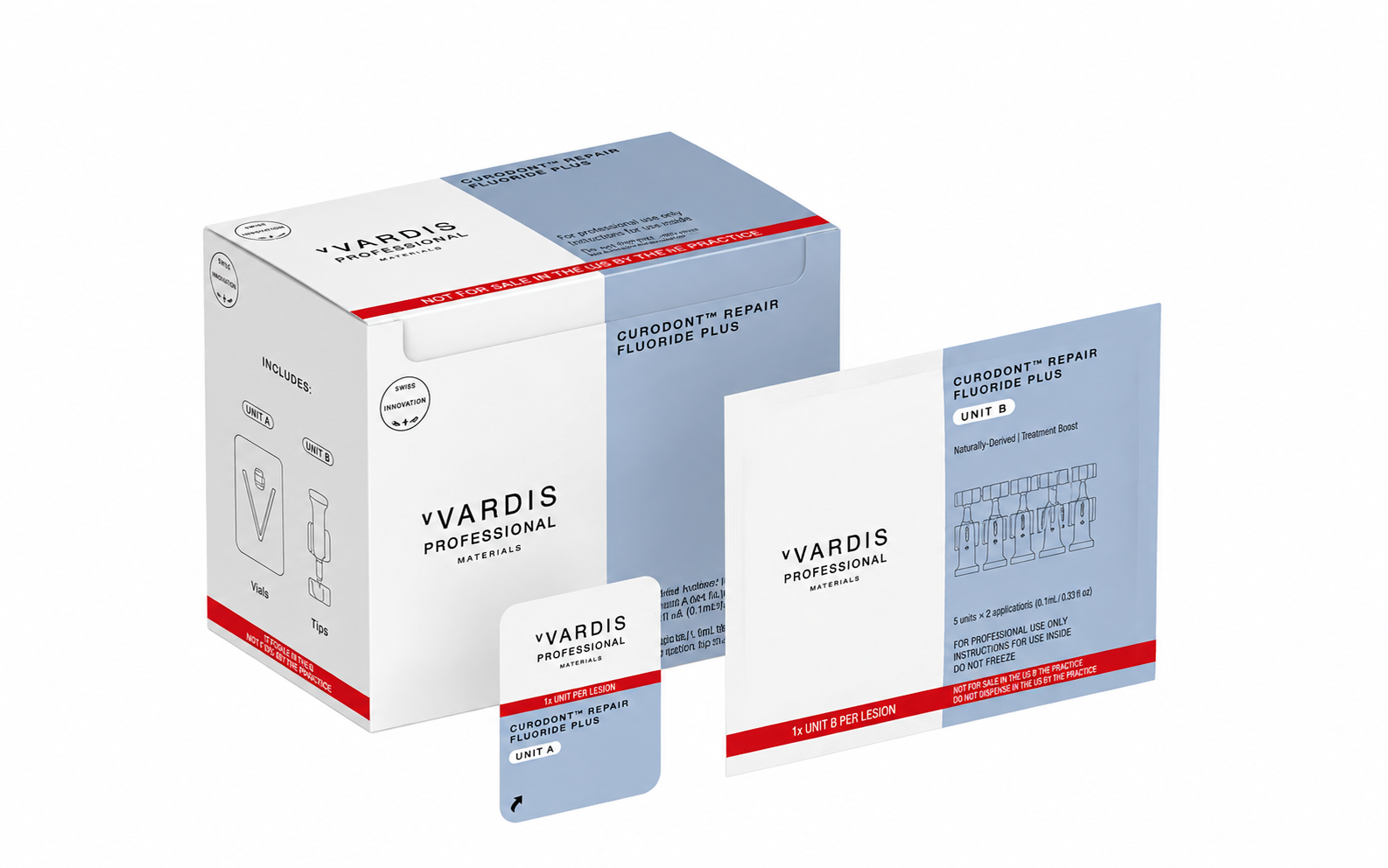
What if catching a cavity early could mean no drilling, no needle, and no traditional filling?
For decades, many of us have thought about cavities in a very simple way: find decay, remove it with a drill, and replace the missing tooth structure with a filling.
But dentistry continues to evolve.
When tooth decay is detected in its earliest stages, before a true hole or cavity has formed in the enamel, we may have another option: Curodont® Repair Fluoride Plus.
This minimally invasive treatment is designed to support the natural remineralization of early enamel lesions while preserving as much of your natural tooth as possible.
Wondering if an early cavity can be treated without drilling?
The first step is finding out how far the decay has progressed. Schedule an exam at Almore Dental Studio and let us evaluate the area before a small problem becomes a bigger one.
First: not every cavity needs a filling.
The word cavity is often used to describe every stage of tooth decay, but decay actually develops gradually.
In its earliest stage, acids produced by oral bacteria begin removing minerals from the enamel. The tooth may be weakened, but the outer structure can still be intact.
This is known as an initial or non-cavitated carious lesion.
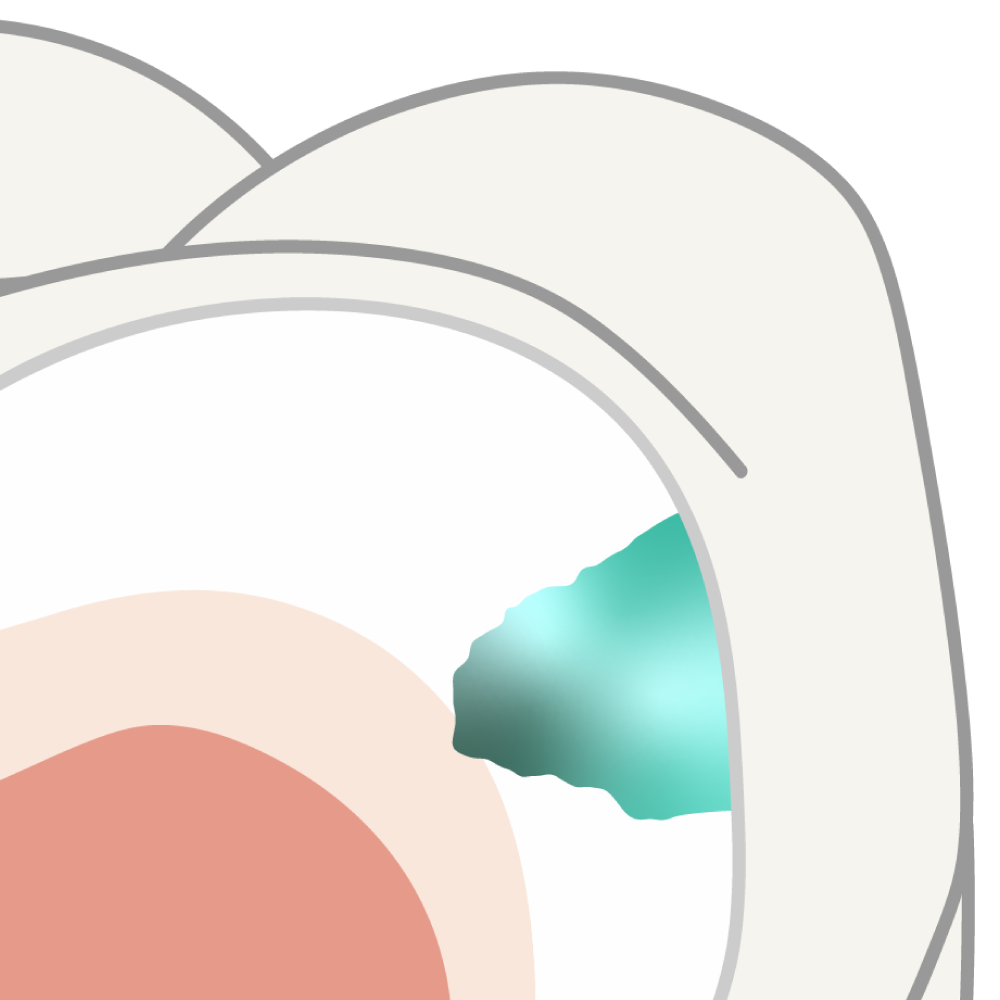
And that distinction matters.
Once decay progresses far enough that the enamel has physically broken down and a true cavity has formed, restorative treatment such as a filling may still be necessary.
But when we identify the problem early enough, Curodont® may allow us to take a more conservative approach.
Meet Curodont®.
Curodont® Repair Fluoride Plus is a professional treatment developed specifically for early, non-cavitated tooth decay.
Rather than drilling away weakened enamel and replacing it with a restorative material, Curodont® uses biomimetic technology designed to work within the early lesion and support enamel remineralization.
What patients usually want to know:
- No drilling is required for an appropriate early lesion.
- No injection or local anesthetic is typically needed for the application.
- The treatment is non-invasive.
- It preserves natural tooth structure.
- The in-office application is quick.
- It can be used for appropriate early lesions in children and adults.
So, how does Curodont® work?
Healthy enamel is largely made from minerals, including calcium and phosphate. During the early stages of tooth decay, some of those minerals are lost from beneath the enamel surface.
Curodont® contains a self-assembling peptide known as P11-4.
After the tooth is prepared and the product is applied, the formulation penetrates into the early lesion. The peptide then forms a microscopic biomatrix that helps attract calcium and phosphate from saliva into the weakened area.
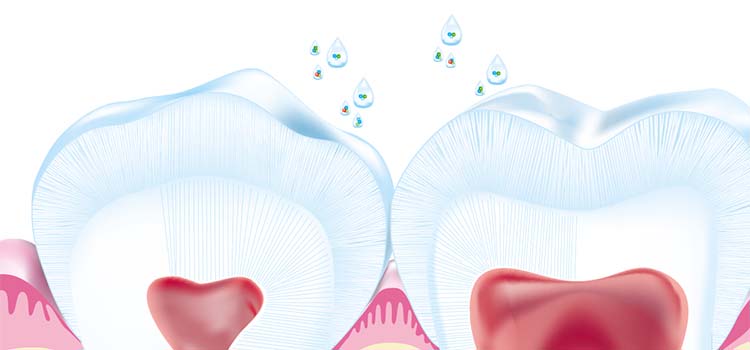
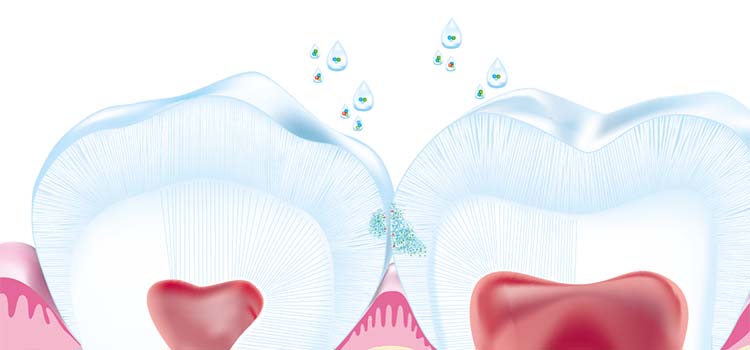
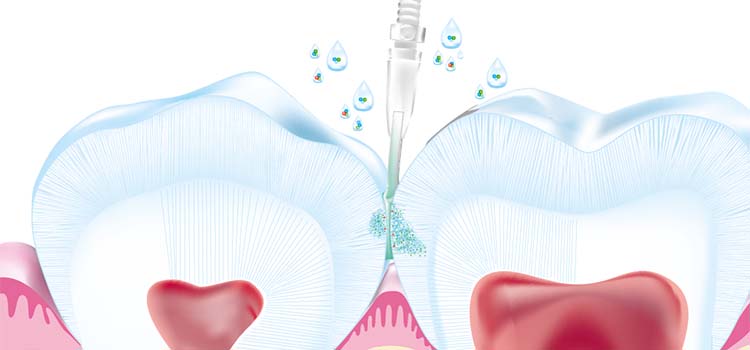
In simple terms, instead of immediately removing the weakened enamel, the goal is to support the tooth’s mineral repair process from within the lesion.
What happens during treatment?
One of the most appealing parts of Curodont® is how conservative the treatment is.
We identify the lesion.
Your dentist evaluates the tooth clinically and, when appropriate, with dental imaging to determine whether the decay is still at a stage that may benefit from non-invasive treatment.
The tooth is prepared.
The area is carefully cleaned and prepared according to the treatment protocol so the material can reach the affected enamel.
Curodont® is applied.
The material is placed directly onto the early lesion. Its peptide technology is designed to diffuse into the weakened area of enamel.
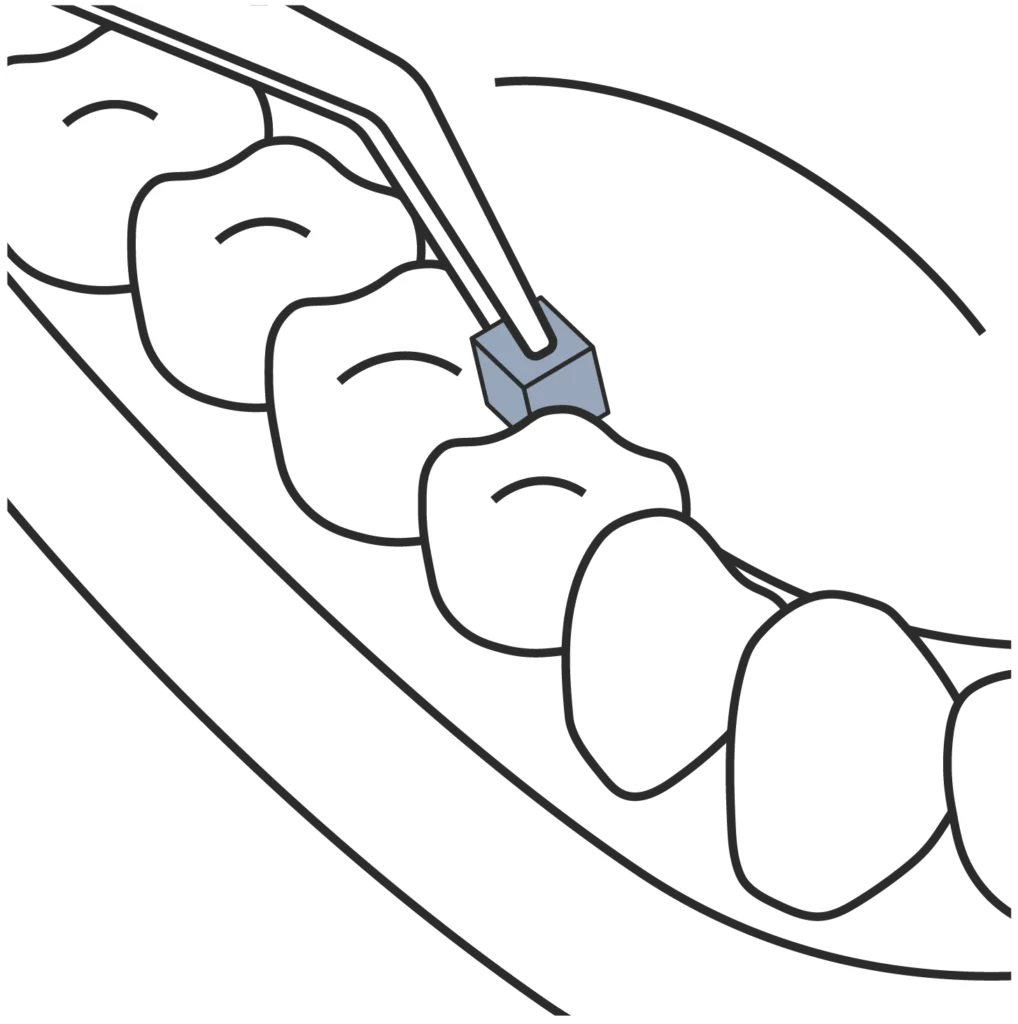
Your tooth continues the process.
Following treatment, minerals naturally present in saliva help support the remineralization process over time.
Small cavities are exactly why routine checkups matter.
Early decay does not always hurt. Regular examinations give us an opportunity to identify changes while conservative treatment options may still be available.
The catch? We have to find it early.
As exciting as drill-free treatment sounds, there is one important point to understand:
Curodont® is not appropriate for every cavity.
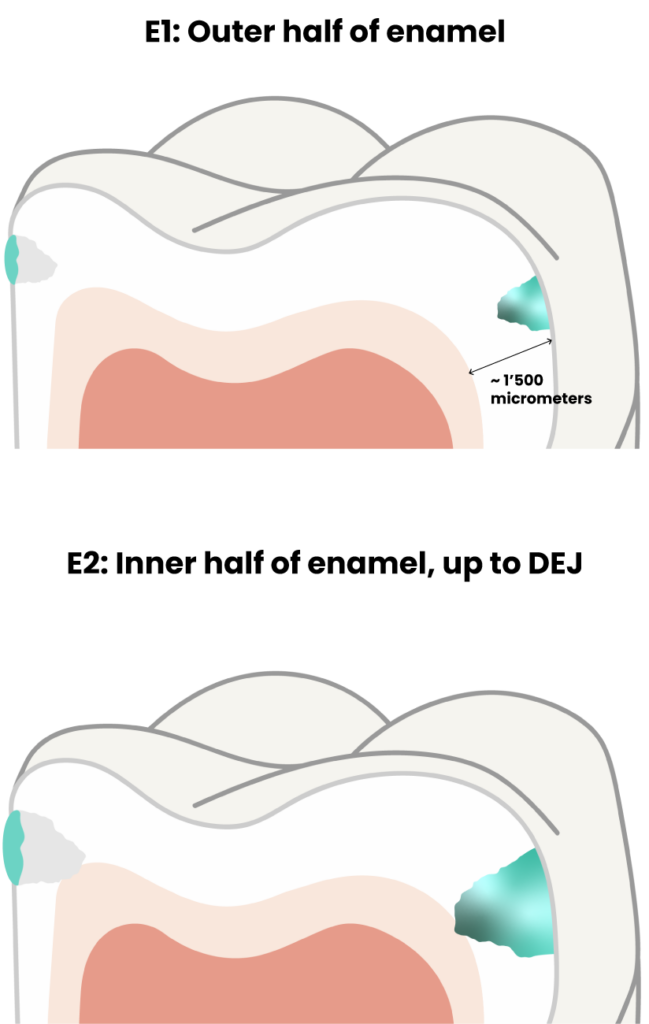
It is intended for specific early, non-cavitated lesions. If decay has already progressed significantly, if the enamel surface has collapsed, or if deeper areas of the tooth are involved, a filling or another restorative treatment may be the healthier choice.
That is why waiting until a tooth hurts is not a good strategy.
Early tooth decay can develop with little or no discomfort. By the time significant pain appears, the condition may already require more extensive treatment.
Who may be a candidate for Curodont®?
Curodont® may be considered when your dentist identifies an appropriate early-stage enamel lesion that has not yet become a fully cavitated defect.
Depending on the individual case, this may include early decay found on:
- The chewing surfaces of teeth.
- Smooth enamel surfaces.
- Areas between teeth detected during an examination or on dental X-rays.
- Certain early white-spot lesions.
- Appropriate early lesions in primary or permanent teeth.
A professional dental examination is necessary to determine whether a particular lesion is suitable for Curodont®.
Does Curodont® mean fillings are obsolete?
No—and that is an important distinction.
Traditional fillings remain an essential treatment when tooth decay has caused irreversible structural damage.
What treatments such as Curodont® give us is something different: another option between simply watching an early lesion and immediately drilling the tooth.
Modern dentistry is increasingly focused on preserving healthy natural tooth structure whenever possible. When we can intervene earlier and more conservatively, that is worth considering.
Why your routine checkup is more important than you think
There is an understandable temptation to skip a dental appointment when everything feels fine.
But preventive dentistry is not only about cleaning your teeth.

Your routine exam gives us an opportunity to identify subtle changes before they become larger problems. And with newer treatment options available, detecting decay earlier may make a real difference in what happens next.
A tooth that may be suitable for a non-invasive approach today could eventually require a filling if decay is allowed to continue progressing.
In other words, we are not asking you to come back for regular checkups simply because we enjoy seeing you.
Although we do.
Frequently Asked Questions About Curodont®
Does Curodont® require drilling?
For an appropriate early, non-cavitated lesion being treated with Curodont®, the treatment itself does not require drilling away the affected enamel.
Do I need a needle or anesthesia?
Curodont® is a non-invasive topical treatment, so local anesthetic is generally not required for the application itself.
How long does Curodont® treatment take?
The professional protocol is relatively quick and can generally be completed during an office visit. The Curodont® formulation is designed to diffuse into the early lesion within approximately five minutes, while the complete clinical application protocol takes additional time for preparation.
Can Curodont® fix every cavity?
No. It is intended for selected early, non-cavitated carious lesions. More advanced decay or teeth with structural breakdown may still need a traditional restoration.
Can children receive Curodont®?
Curodont® can be considered for appropriate early lesions in both children and adults. Your dentist will determine whether the tooth and lesion meet the criteria for treatment.
How do I know whether I qualify?
The only way to know is through a dental examination. The stage, depth, location, and condition of the lesion all influence which treatment is appropriate.
Early diagnosis can mean more choices.
Dentistry does not always have to begin with a drill.
When we identify decay early, treatments such as Curodont® may give us an opportunity to preserve more of your natural enamel and approach the problem conservatively.
And even when Curodont® is not the right solution, finding decay sooner usually allows us to address it before the problem becomes more complex.
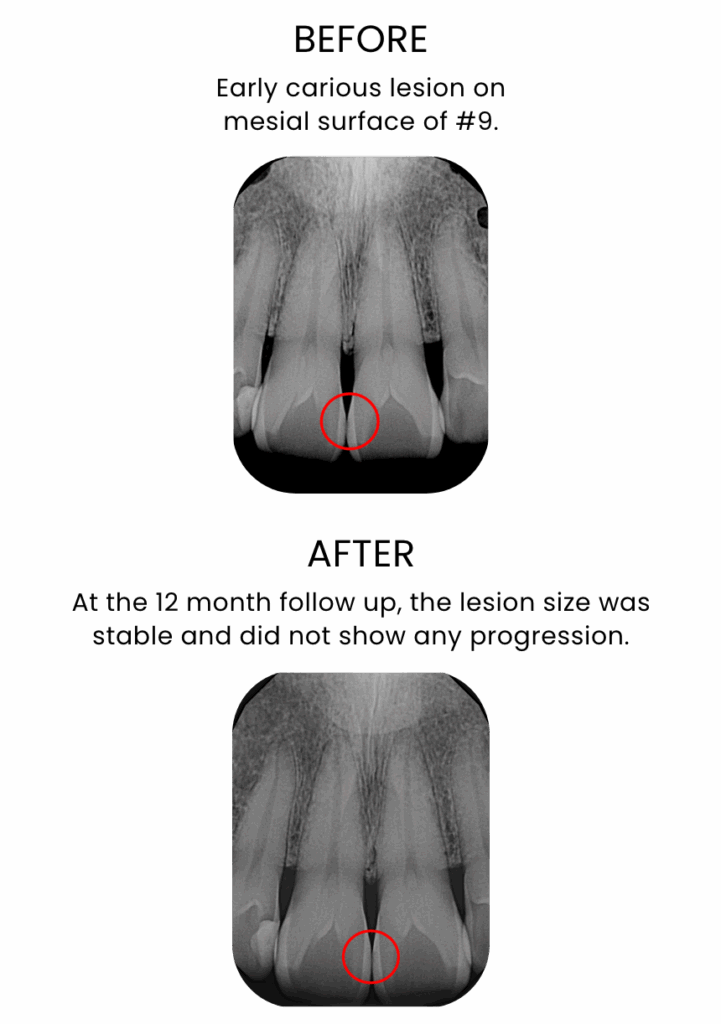
At Almore Dental Studio in Westampton, New Jersey, our goal is to combine thoughtful preventive care with modern dental technology so that every treatment decision is based on what your smile actually needs.
Ask us about Curodont® at your next visit.
Have a suspicious area, an early cavity, or simply haven’t had a dental exam recently? Schedule your visit and find out which treatment options may be available before decay progresses.