

How to Prevent Cavities: 9 Dentist-Backed Ways to Protect Your Enamel


Cavities don’t appear overnight. Tooth decay develops gradually, which means many of the habits that protect your enamel happen long before you ever need a filling.
The good news? A large part of cavity prevention comes down to simple, consistent habits: keeping plaque under control, strengthening enamel, reducing frequent acid attacks, and letting your dentist identify changes while they’re still small.
At Almore Dental Studio in Westampton, New Jersey, prevention is about more than telling you to “brush better.” It’s about understanding why cavities form, identifying your individual risk factors, and creating a routine that actually works for your smile.
When was your last dental exam?
Cavities can develop before you notice pain or sensitivity. A preventive visit gives us a chance to identify changes early, clean areas that are difficult to reach at home, and personalize your cavity-prevention plan.
First: how does a cavity actually form?
Your mouth naturally contains bacteria. When certain bacteria interact with carbohydrates and sugars from food and drinks, they produce acids. Those acids can remove minerals from the outer layer of your teeth — the enamel.
Your saliva, fluoride exposure, and healthy daily habits can help replace some of those lost minerals. But when acid attacks happen too frequently or plaque stays on the teeth for too long, mineral loss can begin to outpace repair.
Oral bacteria use fermentable carbohydrates as fuel.
Bacterial acids temporarily lower the pH around your teeth.
Repeated acid exposure can weaken tooth enamel over time.
If the balance isn’t restored, an early lesion can progress.
Brush twice a day with fluoride toothpaste.
Brushing removes plaque and food debris from the surfaces of your teeth. But the toothpaste you choose matters too.
Fluoride helps strengthen enamel and supports the remineralization of areas that have been affected by acid. For most patients, brushing twice daily with a fluoride toothpaste is one of the simplest and most effective habits for reducing cavity risk.
Take your time. Two thorough brushing sessions are more useful than several rushed ones.
Learn about fluoride treatments at Almore →Clean where your toothbrush can’t reach.
A toothbrush does a great job on the exposed surfaces of your teeth, but the spaces between teeth are different.
Plaque and food can remain in these areas even after brushing, which is why cavities often develop between neighboring teeth.
Floss, interdental brushes, or another dentist-recommended interdental cleaner can help remove plaque from these harder-to-reach spaces.
The best interdental tool is the one you can use correctly and consistently.
Watch how often you expose your teeth to sugar.
When it comes to cavities, frequency matters.
Sipping a sugary drink or grazing on sweet snacks throughout the day repeatedly exposes your enamel to acid-producing conditions. Your mouth has less time to recover between each episode.
That doesn’t mean you need a completely sugar-free diet. A more practical goal is to reduce how frequently your teeth are exposed to sugary foods and drinks, especially between meals.
Don’t forget about acidic drinks.
Sugar isn’t the only thing that can challenge enamel. Frequently sipping acidic beverages can also create an environment that makes enamel more vulnerable.
Soda, sports drinks, energy drinks, citrus beverages, and some flavored drinks may be both acidic and high in sugar.
Water remains one of the simplest choices for your teeth, especially between meals.
It’s not only what you drink — it’s how long you sip it.
Finishing a sweet or acidic beverage with a meal generally creates fewer repeated exposures than sipping that same drink continuously over several hours.
Protect your saliva — it’s part of your natural defense.
Saliva does much more than keep your mouth comfortable. It helps wash away food particles, neutralize acids, and provides minerals involved in the natural remineralization process.
Dry mouth can increase cavity risk because teeth lose some of that natural protection.
Stay hydrated, and if your mouth frequently feels dry, let your dentist know. Dry mouth can have many causes, including medications and health conditions, and managing it may become an important part of your preventive plan.
Your cavity risk isn’t exactly the same as everyone else’s.
Previous cavities, dry mouth, diet, enamel condition, dental restorations, orthodontic appliances, hygiene habits, and other factors can all change what prevention should look like for you.
Ask whether professional fluoride makes sense for you.
Fluoride isn’t only for children.
Some adults may also benefit from additional fluoride exposure, particularly when they have a higher risk of cavities. Professional fluoride treatment can provide an extra layer of enamel support as part of a personalized preventive care plan.
Your dentist can determine whether your individual cavity risk makes professional fluoride worthwhile.
Explore fluoride treatments →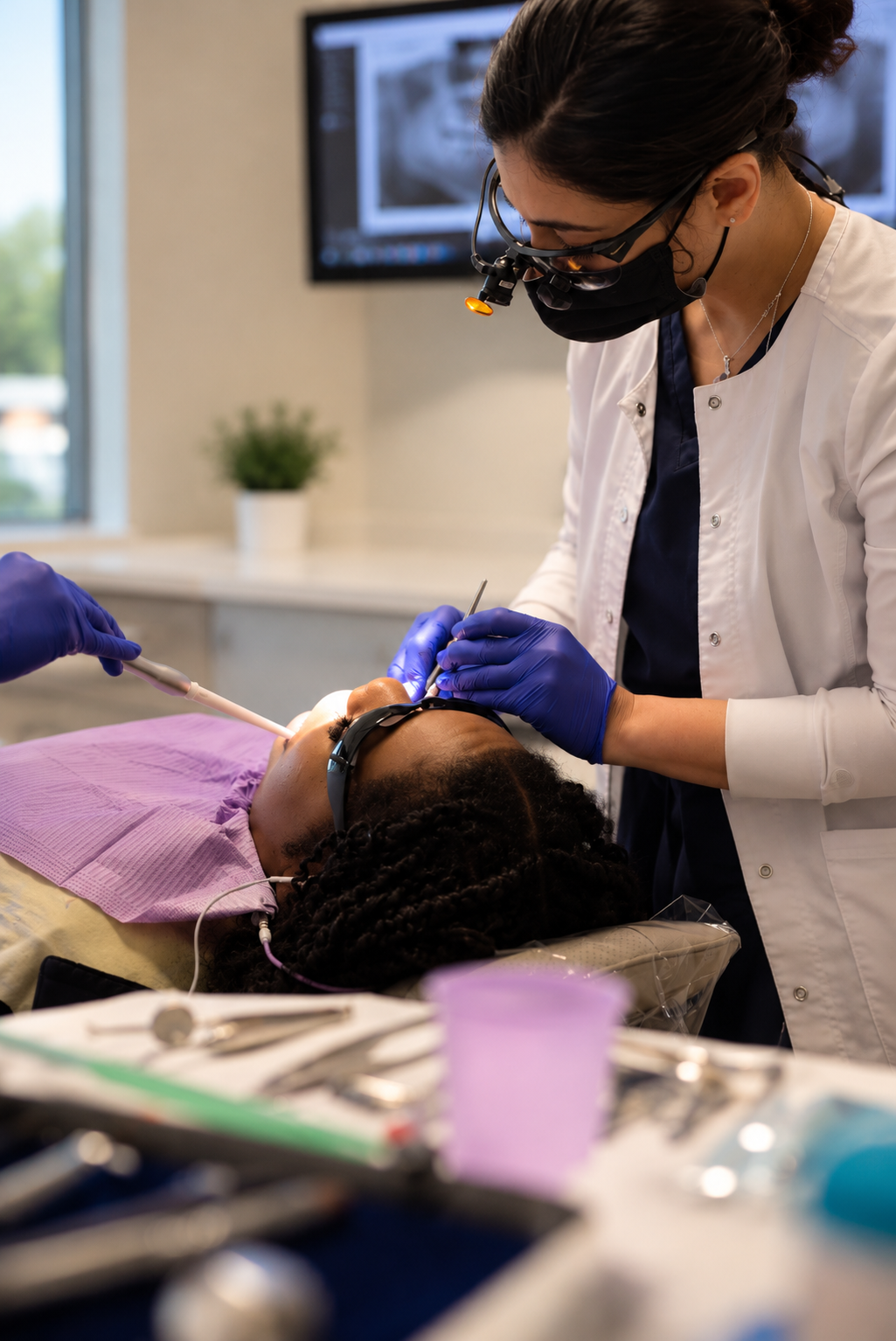
Protect deep grooves with dental sealants.
Your back teeth contain natural pits and grooves that can be difficult to clean completely with a toothbrush.
Dental sealants are thin protective coatings placed on the chewing surfaces of these teeth. They create a barrier that helps keep food and cavity-causing bacteria out of vulnerable grooves.
Sealants are especially common for children and teenagers, but they may also be appropriate for certain adults depending on their teeth and cavity risk.
Learn more about dental sealants →Don’t wait for pain before seeing your dentist.
One of the biggest misconceptions about cavities is that you’ll always know when you have one.
Early tooth decay may cause no pain at all. By the time a tooth becomes noticeably sensitive or painful, the problem may already be more advanced.
Routine professional cleanings remove buildup that brushing and flossing can miss, while dental examinations and appropriate imaging help your dentist identify changes before they become more complex.
Learn about cleanings and examinations →
When decay starts, treat it early.
Prevention doesn’t end the moment your dentist notices an early area of demineralization.
Tooth decay develops in stages. When a lesion is identified before the enamel has developed a true cavity, there may be opportunities to use more conservative approaches that support remineralization and preserve natural tooth structure.
Once a lesion progresses and tooth structure breaks down, restorative treatment such as a filling may become necessary.

A simple cavity-prevention routine
You don’t need an overly complicated dental routine. Consistency with the basics makes the biggest difference.
- Brush thoroughly twice a day with fluoride toothpaste.
- Clean between your teeth every day.
- Limit frequent sugary snacks and drinks.
- Choose water frequently throughout the day.
- Tell your dentist if you regularly experience dry mouth.
- Keep your recommended dental cleaning and examination schedule.
- Ask whether fluoride, sealants, or other preventive treatments could benefit you.

Frequently asked questions about preventing cavities
No prevention strategy can guarantee that someone will never develop a cavity. However, good oral hygiene, fluoride exposure, appropriate diet habits, professional preventive care, and regular examinations can significantly reduce cavity risk.
For most people, brushing thoroughly twice a day with fluoride toothpaste is an important foundation of cavity prevention. Cleaning between the teeth daily is also important because a toothbrush cannot fully clean those spaces.
Fluoride helps strengthen enamel and supports remineralization after acid-related mineral loss. Fluoride toothpaste is an important part of routine cavity prevention, and some patients may also benefit from professional fluoride treatments.
Sealants are commonly recommended for children and teenagers because newly erupted molars can be vulnerable to decay. However, certain adults may also benefit from sealants depending on the anatomy of their teeth and their individual cavity risk.
Very early mineral loss may sometimes be managed with remineralization-focused strategies when the enamel surface is still intact. Once tooth structure has physically broken down and a true cavity has formed, the missing structure does not simply grow back and restorative treatment may be necessary.
Brushing is only one part of cavity prevention. Diet frequency, interdental plaque, fluoride exposure, dry mouth, tooth anatomy, existing dental work, hygiene technique, and other individual factors may affect your cavity risk. A dental evaluation can help identify which factors may be contributing in your specific case.
The goal isn’t just fewer fillings. It’s healthier teeth for longer.
Preventive dentistry works best when small habits at home are combined with professional care and early detection.
Brushing, interdental cleaning, fluoride, smart dietary habits, sealants when appropriate, and routine dental visits all contribute to the same goal: keeping your natural teeth healthy and strong for as long as possible.
And when something does begin to change, catching it early may give you more options and help us take a more conservative approach.
At Almore Dental Studio in Westampton, NJ, we combine preventive care, modern diagnostics, patient education, and personalized treatment planning to help protect your smile at every stage.
Protect your smile before small problems become bigger ones.
Schedule your next cleaning and dental exam at Almore Dental Studio. We’ll evaluate your teeth, discuss your cavity risk, and help you build a prevention plan designed around your smile.